
In his novel The Last White Man, Lahore-based, Booker-shortlisted novelist Mohsin Hamid premises the narrative on a bizarre scenario: one day a white man named Anders wakes to find he has turned brown. The novel does not depict COVID-19 directly, but Hamid has described it in interviews as inseparable from the pandemic, written while Lahore was locked down and shaped by the claustrophobia and uncertainty of that period. The racial transformation that overtakes Anders, and gradually the entire town, functions as a parable for the way a crisis strips away the categories people rely on to organise their world. Anders’s first response to his changed body is not grief but an unexpected, murderous rage—he wants to destroy the stranger who confronts him in his own mirror, a reaction that exposes the violence latent in an identity built on whiteness.
Hamid’s prose style itself enacts confinement: long, winding, comma-laden sentences that mimic the disorientation of time under quarantine. Anders is trapped indoors because he does not dare to step outside, moving compulsively from computer to refrigerator to bed to sofa, unable to escape himself. The novel traces how the community responds to the “changing” through stages that mirror the pandemic’s social dynamics—denial, scapegoating, militia violence, and eventually a grudging, fragile acceptance. The question of race is not incidental to this arc but central: Anders’s whiteness, which had been invisible to him before its removal, is revealed as a structure of privilege only when it vanishes. The town’s social hierarchies collapse, and relationships that were once fixed by race and class must be renegotiated in a world where the old markers of difference no longer hold. Hamid deepens this further through the subplot of Anders’s dying father, whose transformation comes too late to matter but whose death—narrated in a single, breathless sentence that refuses to break—becomes the novel’s emotional centre.
This oblique approach matters for the archive because it demonstrates how fiction can register a crisis without naming it, absorbing the pandemic’s emotional and social texture into allegory. Read alongside Arundhati Roy’s essay and Kamila Shamsie’s “The Walk,” Hamid’s novel completes a trio of major South Asian writers responding to COVID-19 through very different literary strategies—polemic, realist miniature, and parable.
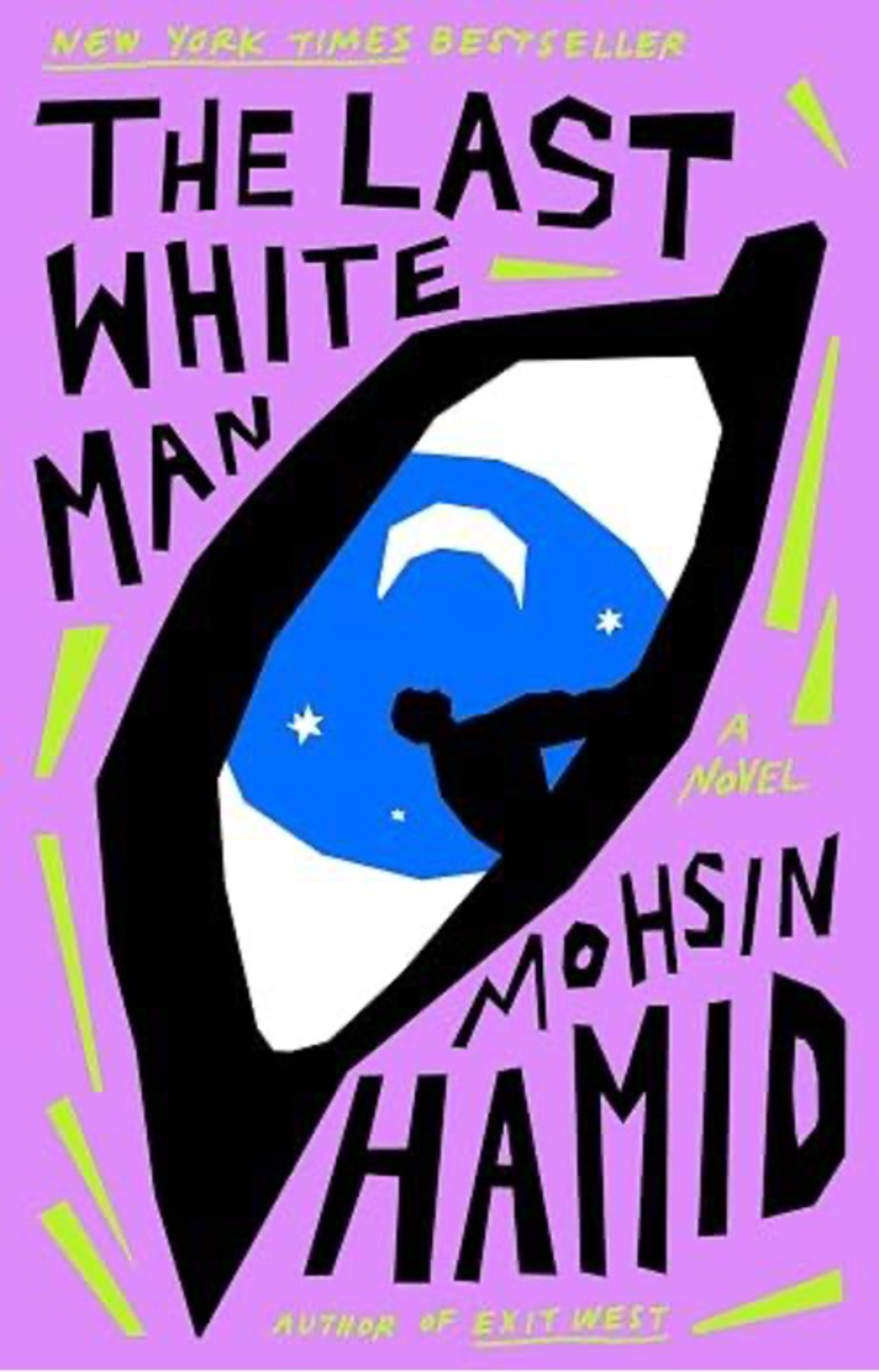
Image Captions:
Cover image of The Last White Man by Mohsin Hamid. Riverhead Books, 2022.Citation: Hamid, Mohsin. The Last White Man. Riverhead Books, 2022. FICTION, NOVEL | PAKISTAN, US. ll
Source Type: Fiction
Country: Pakistan and US
Date: 01-Jan-2022
Keywords: Allegory, Identity,, Lahore, Lockdown Fiction, Racial Transformation, and South Asian Fiction