
In his study “Pandemic India: Coronavirus and the Uses of History,” David Arnold, Professor Emeritus at the University of Warwick and a leading historian of medicine in colonial South Asia, asks what use the past can be in a pandemic whose novelty is constantly asserted. He identifies two competing narratives in India’s COVID-19 story: a “historical” one, in which the current crisis repeats the patterns of cholera (1817), bubonic plague (1896), and the influenza pandemic of 1918–19; and an “insurgent” one, which argues that India in 2020 is fundamentally different from the colonised, famine-weakened country that lost twelve million people to influenza a century ago. Arnold sets these two narratives against each other to examine what pandemic history can and cannot teach.
His method is comparative historical analysis grounded in the social history of medicine, drawing on his earlier work, Colonizing the Body (1993). Arnold traces how each pandemic assigned India a different geopolitical role: originator and incubator for cholera, recipient and amplifier for plague, and overlooked sideshow for influenza. What links them is the recurrence of blame, migrant flight, and the punitive policing of the poor—a dynamic Arnold traces from the Epidemic Diseases Act of 1897, a piece of draconian legislation that was “resurrected, 123 years later, by the present government of India to tackle a comparable crisis” (13). The historical narrative gains force from the real-time imagery of migrant workers fleeing cities under Modi’s four-hour-notice lockdown, scenes that remind of Partition’s mass migrations. But Arnold also documents the pandemic’s Islamophobic dimension: the Tablighi Jamaat was blamed for thousands of cases, Muslims were accused of being “coronavirus terrorists,” and the Modi government was slow to condemn a tide of hatred that mobilised “majoritarian hostility not to an unpopular colonial regime but to a perceived ‘enemy’ within” (19).
Arnold’s significance lies in his refusal to let history serve as either comfort or condemnation. He cautions that pandemics are “too complex and fine-grained a phenomenon, too bound by specificities of time, place, and culture, to be used in so hasty a fashion” (19), and insists that the insurgent narrative from the Global South—which emphasises India’s pharmaceutical capacity, its experience with serial epidemics, and its difference from the colonised past—deserves equal weight alongside inherited Western epidemiological orthodoxies. For the archive, the chapter models how a historian of South Asia can read COVID-19 through the deep archive of colonial medicine without reducing the present to a repetition of the past.
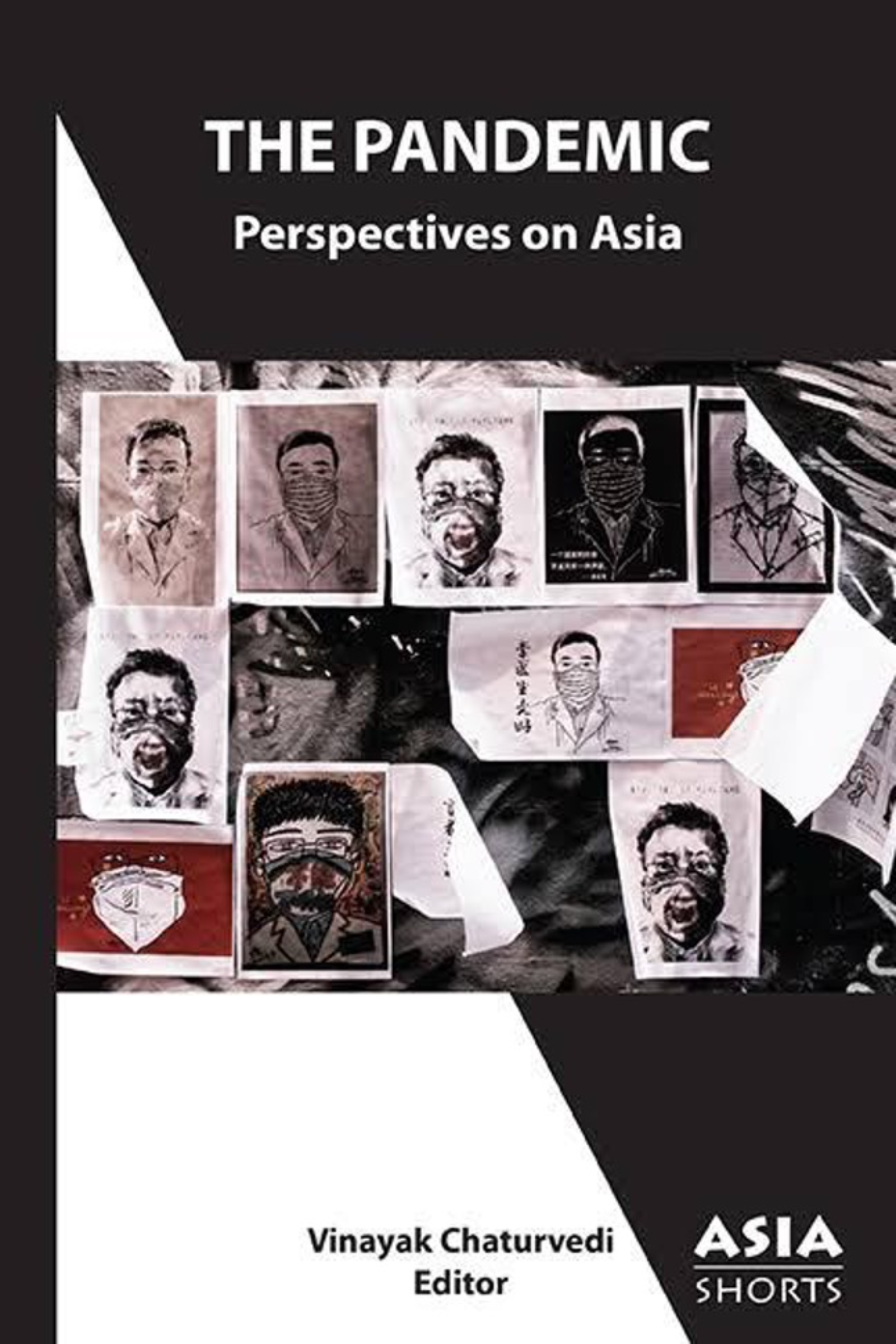
Image Captions:
Cover image of The Pandemic: Perspectives on Asia, edited by Vinayak Chaturvedi. Association for Asian Studies, 2020.Citation: Arnold, David. “Pandemic India: Coronavirus and the Uses of History.” The Pandemic: Perspectives on Asia, edited by Vinayak Chaturvedi, Association for Asian Studies, 2020, pp. 11–22. NON-FICTION, SCHOLARLY BOOK CHAPTER | INDIA. ll
Source Type: Scholarship on Pandemic Studies
Country: India
Date: 01-Jan-2020
Keywords: Colonial Medicine, COVID-19 and History, Epidemic Diseases Act, Islamophobia, Migrant Workers, and South Asian Epidemic History