
In his study “The Virulence of Hindutva,” South Asian studies scholar Manan Ahmed Asif argues that India’s COVID-19 catastrophe cannot be understood as epidemiology alone because it unfolds atop a far older and deadlier affliction: the Hindu-majoritarian ideology, Hindutva, that casts Muslims as a foreign contagion in the body politic. Borrowing the clinical concept of comorbidity and transposing it from the physical body to the body politic, Asif names this logic the Mussalmani (Muslim) virus, while noting explicitly that he does so to expose the demonisation of Muslims, not to endorse it. His thesis is stark: “Anti-Muslim violence is the pandemic we refuse to bear witness to” (160).
The corpus Asif reads joins the digital present to the deep past. He begins with a viral WhatsApp cartoon and the hashtag #CoronaJihad, through which a Tablighi Jamaat gathering was blamed for spreading the virus while Muslims were beaten and lynched. He then works backward through the Citizenship Amendment Act, the demolition of the Babri mosque, and the writings of the Hindu nationalist ideologue Vinayak Damodar Savarkar, who in 1923 defined India’s Muslims as forever foreign because their holy land lay in Arabia. His method is the historian’s: he locates his analogue not in the 1918 influenza but in the medieval Black Death, when Jews were massacred as poisoners of wells, a libel whose imagery persisted into the rise of Nazism. That historical parallel deepens his central claim that the pandemic merely activated a pre-existing grammar of exclusion, one in which the vocabulary of contagion and quarantine is weaponised to mark a minority for elimination and to make its deaths “seem natural, normal, necessary for the health of a nation” (160). Asif’s closing sentence is horrifying: “This virulence has no vaccine” (162). For the Pandemic Stories Digital Databank, the essay is indispensable because it names the structural prejudice that turned a public health emergency into a targeted assault on India’s Muslim minority, demonstrating that any honest accounting of the pandemic in South Asia must reckon with the political virulence that preceded the biological one—and that will outlast it.
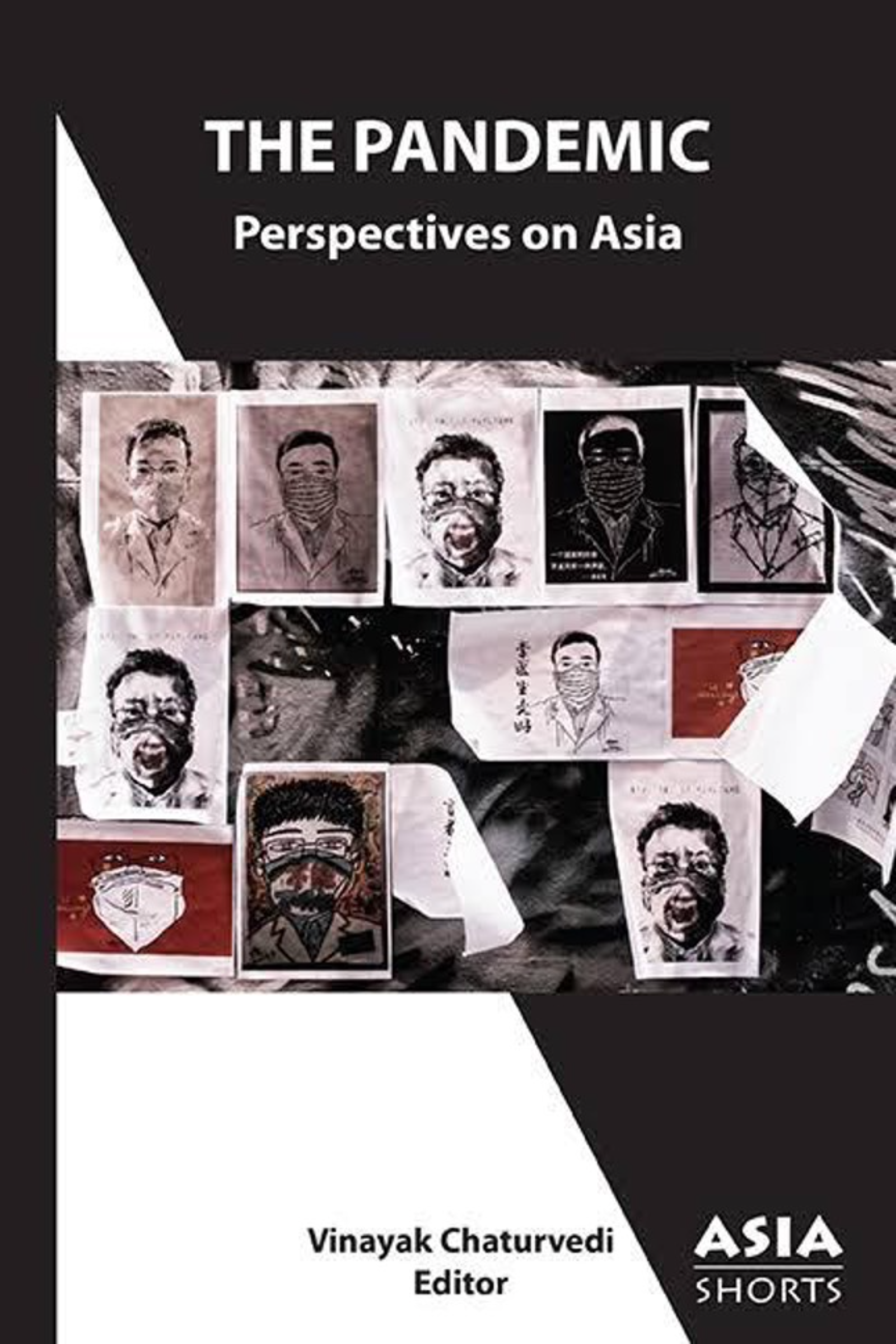
Image Captions:
Cover image of The Pandemic: Perspectives on Asia, edited by Vinayak Chaturvedi. Association for Asian Studies, 2020.Citation: Asif, Manan Ahmed. “The Virulence of Hindutva.” The Pandemic: Perspectives on Asia, edited by Vinayak Chaturvedi, Association for Asian Studies, 2020, pp. 153–65. NON-FICTION, SCHOLARLY BOOK CHAPTER | INDIA, US. ll
Source Type: Scholarship on COVID-19 Studies
Country: India and US
Date: 01-Jan-2020
Keywords: Comorbidity, COVID-19 Scapegoating, Hindutva, Islamophobia, Migrant Workers, and South Asian Politics